The Dq Life Blog
Go back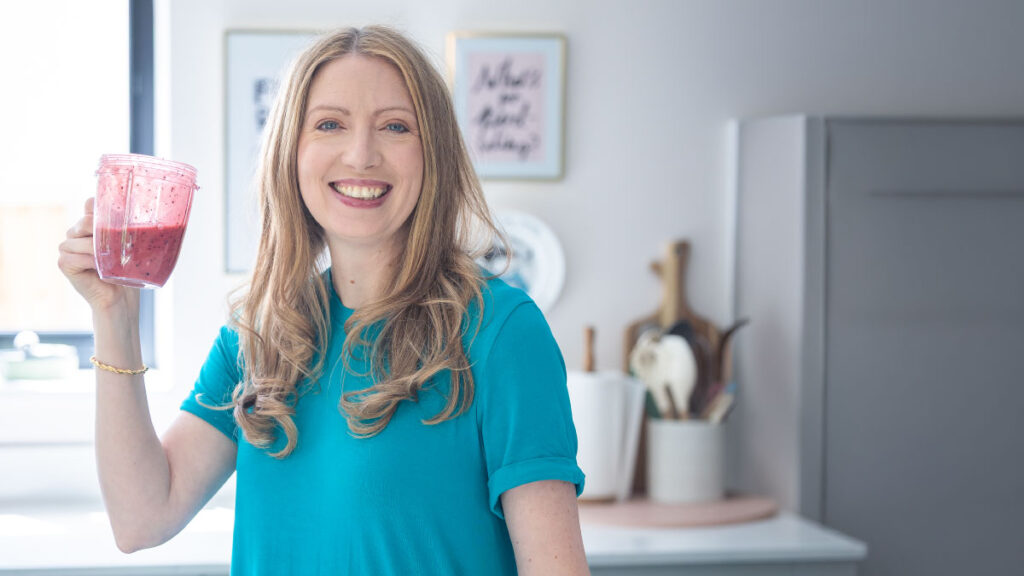
Meet Your Team Brain: Why Groups Think as One Under Pressure
The hidden force behind your boardroom and your family dinner table
Whenever people live or work together for any length of time, something starts to happen beneath the surface of individual personalities. The diverse thinking of the group starts to become aligned and attuned. Without anyone deciding it should, the many start to think, feel and react as if they were one mind.
We call this the Team Brain*.
Why groups think as one
The team brain is built from the same two forces that shape every relationship: individuality, our desire to be unique and distinct, and togetherness, our desire to belong, to be accepted, and to be part of something bigger than ourselves. It is the togetherness force that acts as the glue, bringing people together and holding them there, and over time it forms the particular personality of the group, what most of us would simply call its culture.

Formation and stability
The imprint of a system’s founding members becomes indelible. Just as Bill Gates shaped the culture of Microsoft and Mark Zuckerberg’s personality is stamped all through Facebook and Meta, the first years of any family or team set in place the values, priorities and default ways of relating that shape everything that follows.
In the same way that our brains are born remarkably plastic and grow more resistant to change over time, the shape of a relationship system does too. We repeat particular ways of behaving with each other, and gradually these interactions become patterned, habitual, automatic, “the way things are done around here,” until we stop even noticing the idiosyncrasies of our own family or team, they simply become normal.
“What people do is of more importance than what people say they do”
Murray Bowen, Family Therapy in Clinical Practice
Murray Bowen called this tendency homeostasis: a system’s natural pull towards stability, and its resistance to change even when its current functioning is not working. It operates rather like the body, which regulates temperature and blood pressure to maintain internal stability regardless of what is happening outside it. This is why it is so hard to shift a toxic culture. You can change the leadership, redesign the structure, run the training. But without addressing the homeostatic pull underneath, the same issues tend to resurface.
Our most powerful influencer
Once these patterns are established, they take on a life of their own, and for anyone used to thinking in terms of individual choice, systems do some uncomfortably powerful things. For example, people settle into functional positions within the system: the problem solver, the scapegoat, the needy one. And when someone in one of these roles leaves the system, another member is often unconsciously drafted in to fill the vacancy. It is not uncommon for a child born shortly after a grandparent’s death to end up carrying something of that person’s role in the family.
It can be equally striking within a team, when the one person seen as consistently Difficult finally leaves, and someone who was previously easy to work with suddenly becomes the new Difficult one. The system needed someone to hold the tension the previous person had been holding, and it found a fit.
Murray Bowen advocated mapping relationship patterns back through at least two generations of a family for exactly this reason: the roles being played out today are rarely as new as they feel, and understanding our context helps bring clarity, calm and greater freedom to the present moment.
“We all grow up in families with the backdrop of many generations of patterns that enabled the survival of the group.”
Jenny Brown, Growing Yourself Up
The team brain under stress
Under pressure, the balance between individuality and togetherness tips. The system’s members stop functioning like a fruit salad, each piece still distinct, and start to blend like a smoothie, one undifferentiated mix with no separate parts left to see. This is not a flaw. It is what let a herd of zebra survive on the savannah: one animal spotting a lion is enough for the whole herd to feel the fear and flee together. Human groups work the same way. One person’s stress becomes the group’s stress almost instantly, because for most of our history, that instant shared reaction was what kept the group alive.

The thriving team brain
What varies between groups is how much pressure it takes before this shift into fusion happens, and how quickly they can find their way back. A higher Team DQ means more tolerance for stress before distinctness is lost: less conflict, more creative problem-solving, more room to remain yourself even under pressure. Where Team DQ is lower, it takes very little to tip into fusion, or the system never really leaves it. Every problem becomes an emergency, and people harden into fixed roles, until the nuance of who they actually are is lost inside their position in the system.
The Stress Contagion Quiz is a good place to start recognising how your own team brain responds under pressure.
*Bowen described this dynamic as the emotional system. We use the term team brain to make the same idea more accessible, and because it captures how closely group functioning mirrors the organisation of an individual brain.